Technology & benefits

The material changes.
The view responds.

Electronic light control is a family of technologies. The active layer, the electrical driver and the glazing construction determine the experience—not the name “smart glass”.

Adjustable shadingSwitchable diffusionMatched electronic control

Inside the active layer

Understand the change.

Select a technology to explore its principle and the decisions it introduces.

SC / VARIABLE SHADE
OUTER SURFACEACTIVE LAYERINNER SURFACE
Suspended particle device

Shade, with the view still there.

An SPD layer contains light-absorbing particles whose alignment responds to an applied electrical field. The system varies the amount of light passing through the layer, allowing a darker or lighter view.

The completed glazing retains its own colour, reflections and residual tint. Clearer does not mean optically identical to untreated glass. Evaluate the actual laminate and matched driver for the intended application.

Close view of the polished layered edge of an automotive smart glass laminate
A system, not a coating alone

The layer is only part of the story.

The active material changes the light, while the surrounding construction makes it a usable glazing system. Glass, interlayers, edge protection and the electrical terminations must be reviewed as one specified assembly.

Optical stack
Review colour, reflections, residual haze and viewing angle in the actual glass construction. A small material sample is a starting point for this conversation.
Edges & connections
Allow for protected terminations, sealing and cable exits. Their position affects handling, installation clearance and the route back to the controller.
Matched electronics
Specify the driver for the active material and panel load. SPD and PDLC require their own approved control arrangements; a generic vehicle dimmer is not an equivalent.

A sample helps you choose an optical effect. The completed panel still needs a written specification and a vehicle-specific installation review.

Explore the sample set

Compare the behaviour

Choose by purpose, not by buzzword.

Comparison of SPD, PDLC and electrochromic technologies
Decision SPD PDLC Electrochromic
Primary effect Variable transparent shading Switchable light diffusion Optical absorption change
View in the active private state A darker transmitted view A diffused or frosted view Depends on material design
Typical planning question How should overhead or rear light be adjusted? Where is a private state appropriate? What exact glazing system is specified?
Power & switching Matched SPD driver required Matched PDLC driver required Product-specific control
Vehicle suitability Depends on the completed glazing, vehicle geometry, installation and applicable rules. No technology is universally compatible.

The descriptions explain material principles. Product-specific optical, electrical and environmental limits must come from the final approved specification.

Technology in context

Start with the moment.
Then choose the material.

The useful question is how the glass should behave in a particular part of the vehicle.

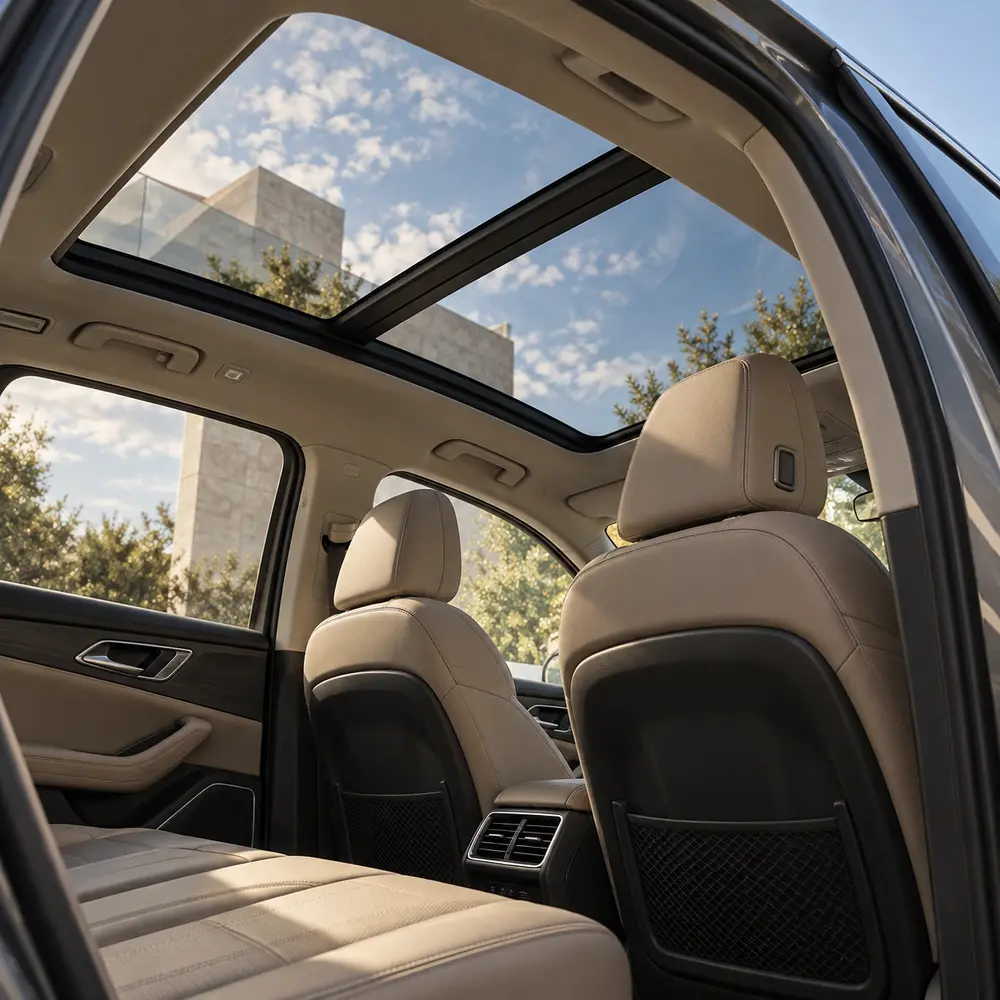
Daylight through transparent panoramic roof glazing above a parked vehicle cabin
01OVERHEAD / DAYLIGHT
The moment / Bright overhead light

Adjust the light.
Keep the sky in the picture.

For a fixed roof, consider variable SPD shading when the aim is to change incoming light while keeping a transmitted view.

Material direction
SPD roof glazing + matched driver.
Review in the sample
Residual tint, reflections and the useful shade range in the actual construction.
View roof glazing
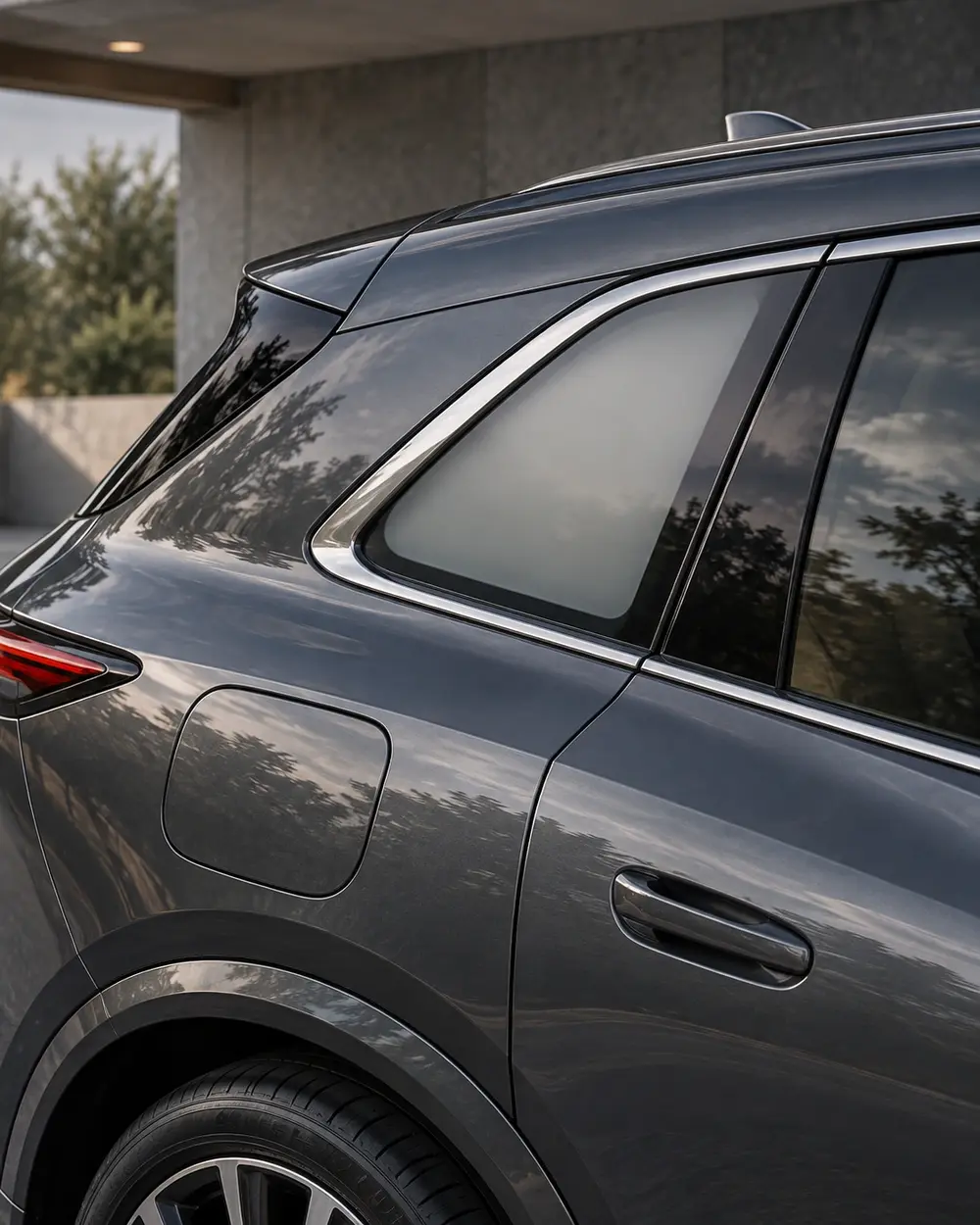
Light-diffusing fixed rear quarter glazing on a parked premium vehicle
02
The moment / Parked rear privacy

A different use of the rear space.

PDLC diffusion can suit an appropriate fixed rear area when parked. A private surface changes the view through it; it must not obscure a required driving sightline.

Material direction
PDLC film + its supplied driver.
Check before installation
Glass position, visibility, local requirements and unpowered state.
Explore the rear privacy kit
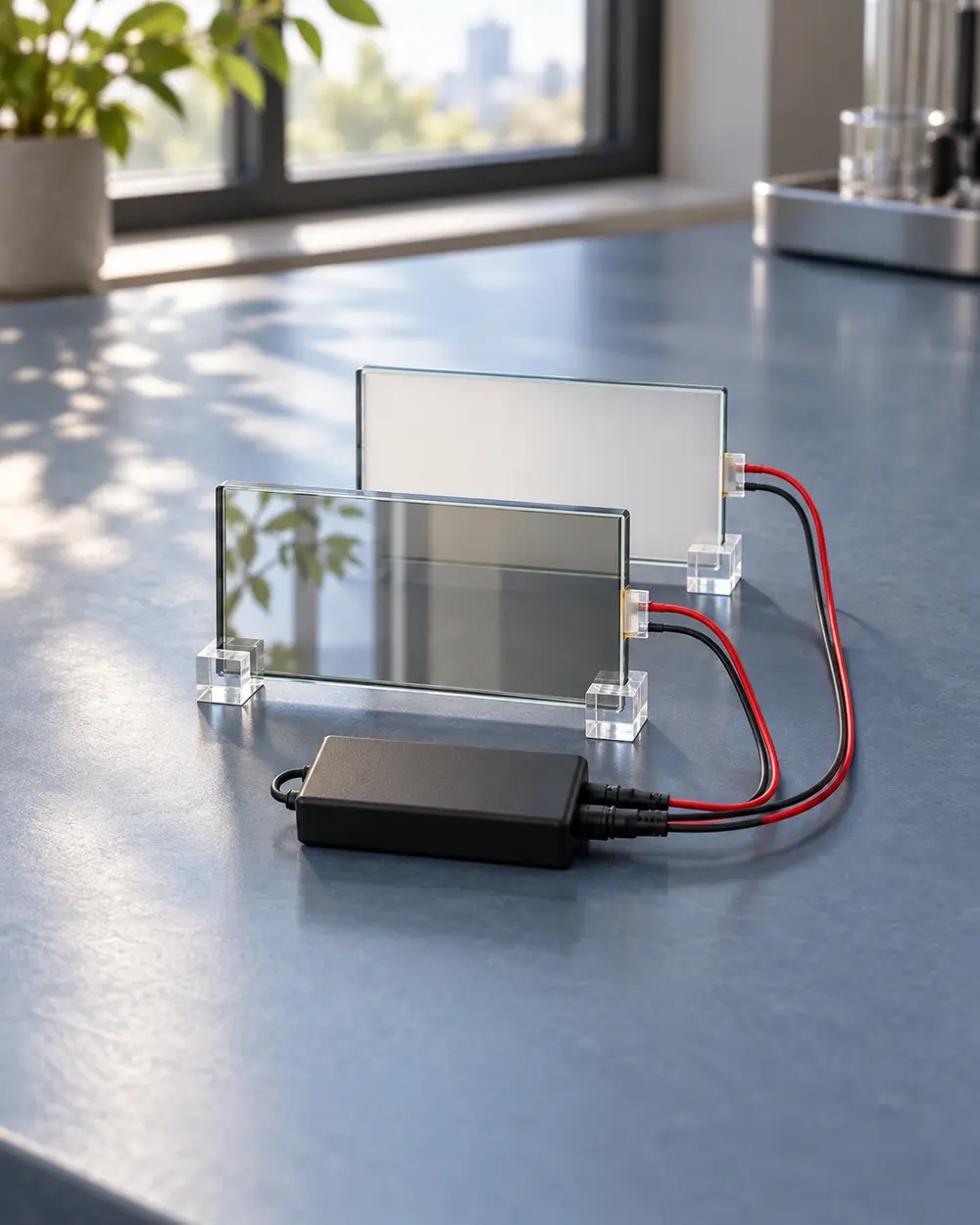
SPD and PDLC samples arranged on a daylight evaluation bench with their driver
03
The moment / Before you commit

See the difference in your own light.

Compare shade and diffusion on the bench before planning a full panel. Use the supplied sample driver and review each material from more than one viewing angle.

Material direction
Surface Sample Set.
What remains to review
Full-panel construction, dimensions, control and vehicle fitment.
Explore the sample set

UV attenuation, solar performance, switching time and operating limits remain product-specific. Request the completed panel specification for any performance decision.

Integration notes

The correct driver matters.

Do not connect an active film or glazing panel directly unless the manufacturer’s specified system explicitly requires it. A vehicle supply and an active-layer drive output are different parts of the installation. Use the matched driver, protection, connections and isolation described in the approved wiring plan.

The unpowered state depends on the material and system design. Conventional SPD and PDLC constructions can become darker or more private without power, but this must be verified for the actual product. Do not assume a fail-clear state, particularly where visibility is required.

No. Different active materials can require different electrical waveforms, output limits and control methods. Panel area and wiring also affect the load. The ControlBridge kit is for a matched SPD configuration; it must not be substituted for the PDLC driver supplied with a privacy kit.

Material reference: Gauzy automotive technology overview

Your next configuration

A different relationship
with the light outside.

Explore the material. Match the glass. Build a light-control system around the way you use your vehicle.

Adjustable shadeMaterial-specific privacyVehicle-led planning
Find your configuration Plan your installation

Glass, film and control.
A considered place to start.

Your selected systems

Complete your order

Review the selected systems and tell us about the vehicle. Your final configuration, delivery and any applicable taxes are confirmed before payment.

No payment is taken at submission. A binding order is formed only after you approve the final specification and invoice. Do not send card numbers or banking credentials.

Compare your selection

Compare the material effect and installation requirements first. Similar dimensions do not establish vehicle compatibility.