
Name the actual material
We distinguish SPD shading from PDLC privacy and explain electrochromic materials separately. Broad phrases such as “smart tint” should not hide how the chosen product behaves.
About Veylor
Veylor Automotive brings glazing, optical materials and control planning into one shopping experience. The aim is a clearer decision about the system—not simply a more dramatic product photograph.
Our point of view
A roof panel, a rear privacy surface and a moving side window are different engineering situations. The same material can demand a different installation route depending on the surface around it.
We organize the collection around that distinction. Each system is presented with its optical purpose, included components and installation responsibility so that the next decision is practical and specific.
Veylor Automotive is the customer-facing brand presented on theacousticcompany.com. The legal entity identified for this storefront is Research Frontiers Inc; its full supplied company details are available on the contact page.
Company & contact details
A configuration, unpacked
Start with a wish for adjustable overhead light. Follow it through the material, the control and the vehicle details that still need to be resolved.
The effect
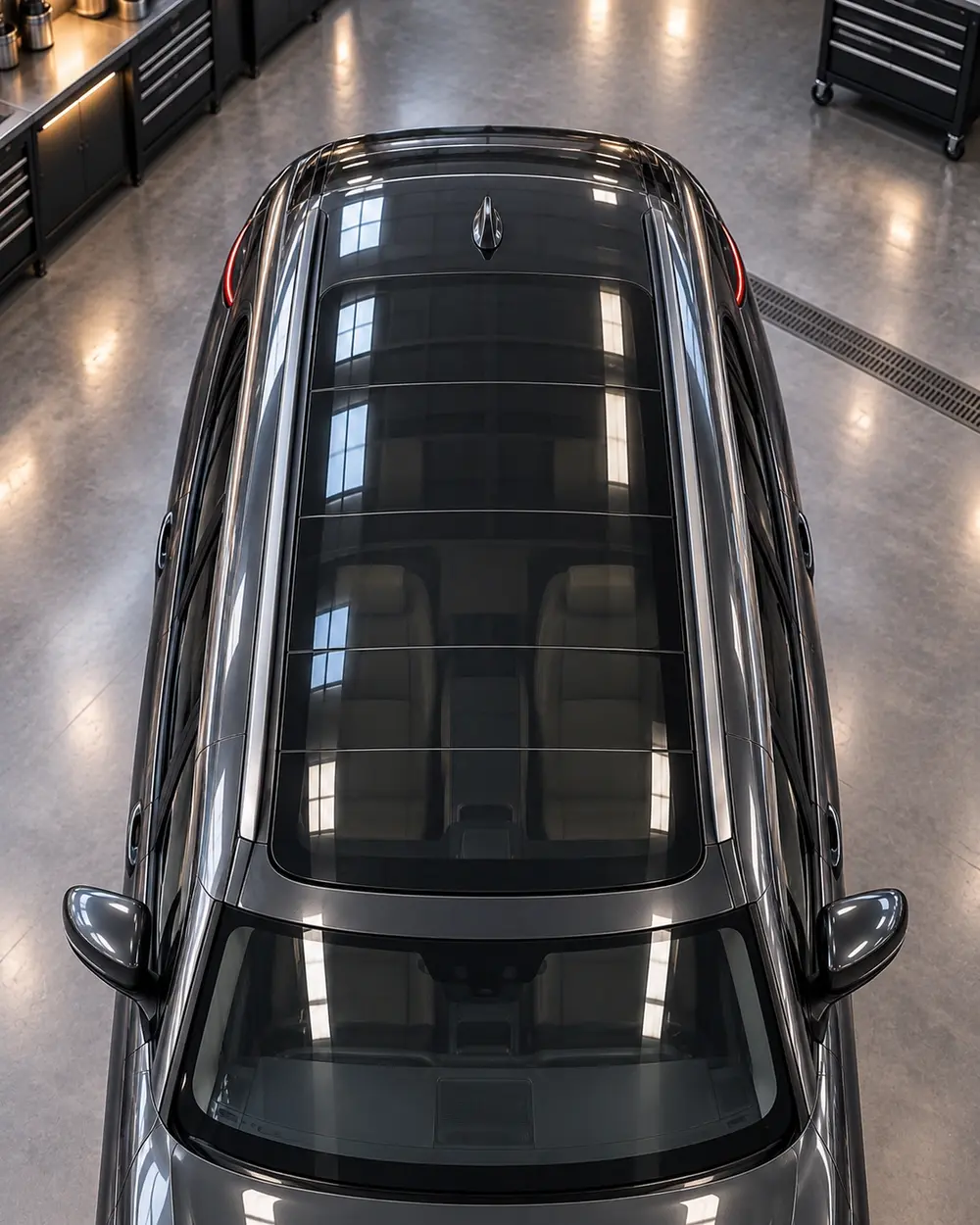
The starting brief calls for a darker or lighter transmitted view. That points the conversation toward shading rather than a frosted private state.
The material
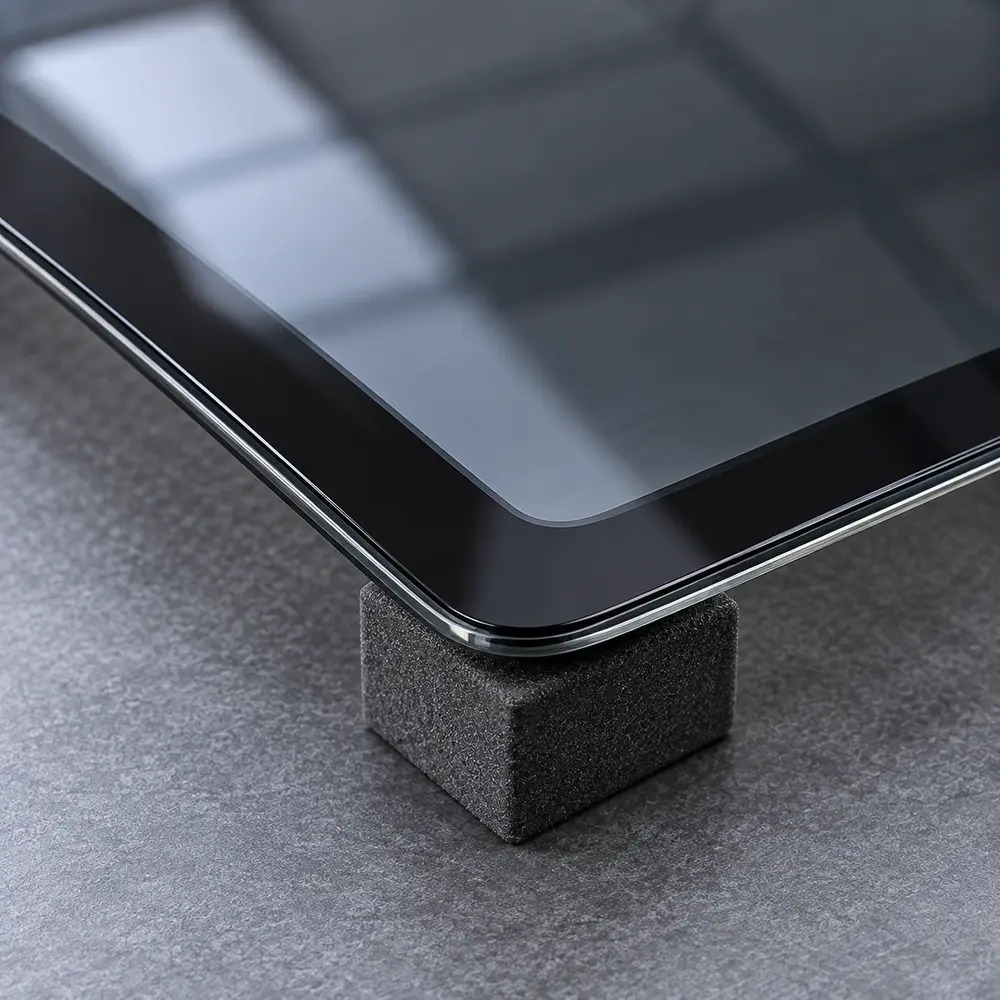
Review a sample, then define the actual roof assembly. Curvature, colour, edges and the complete optical stack belong in the specification.
The control
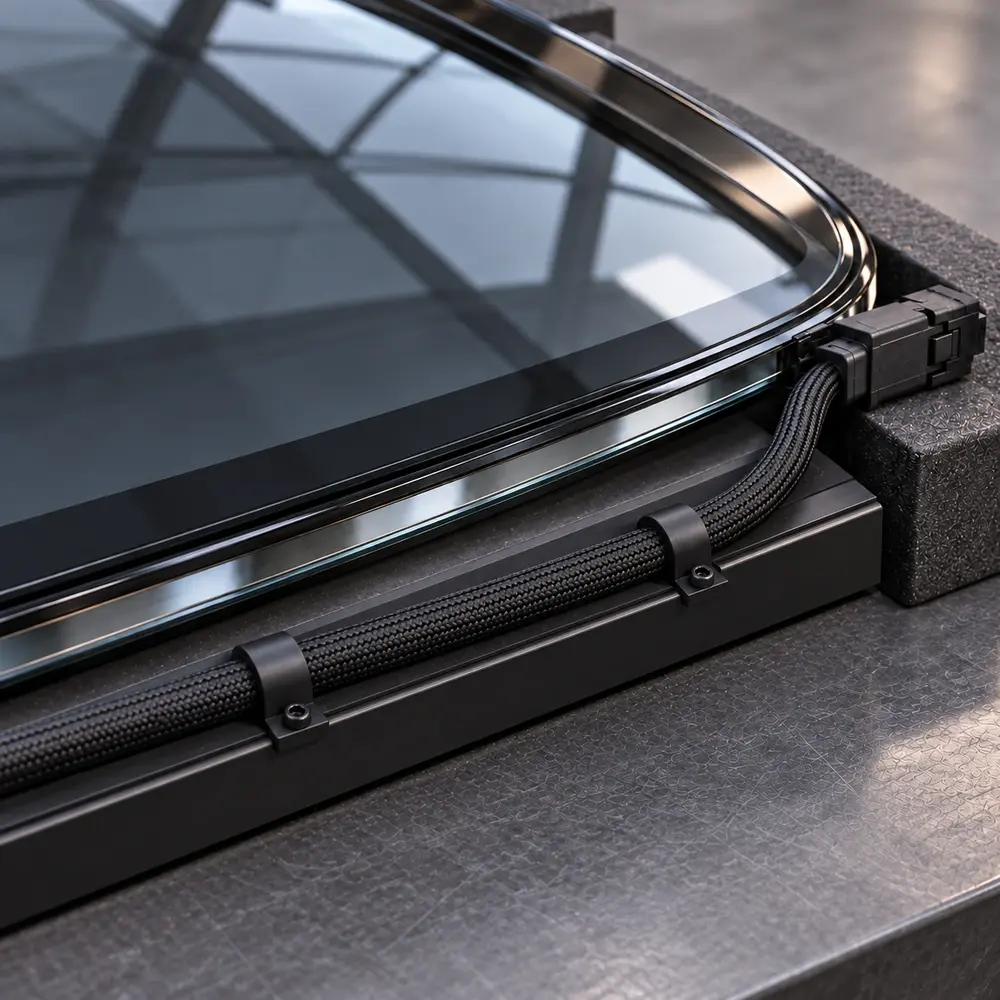
Check the SPD driver against the panel load. Agree the control location, protected wiring route and integration with the vehicle supply.
The installation
Confirm dimensions, mounting, seals and factory equipment with the installer. The vehicle review comes before fabrication or a final fitment decision.
SPD roof assembly + matched SPD control.
Final scope follows the vehicle and installation review.
The way we organize the collection
We distinguish SPD shading from PDLC privacy and explain electrochromic materials separately. Broad phrases such as “smart tint” should not hide how the chosen product behaves.
A glazing assembly, an active-film set and a controller kit are separate offers. Product descriptions identify the supplied components so that the installation scope can be planned properly.
Compatibility, optical performance and road-use suitability depend on the final configuration. We avoid universal fitment claims, absolute protection statements and implied government approval.
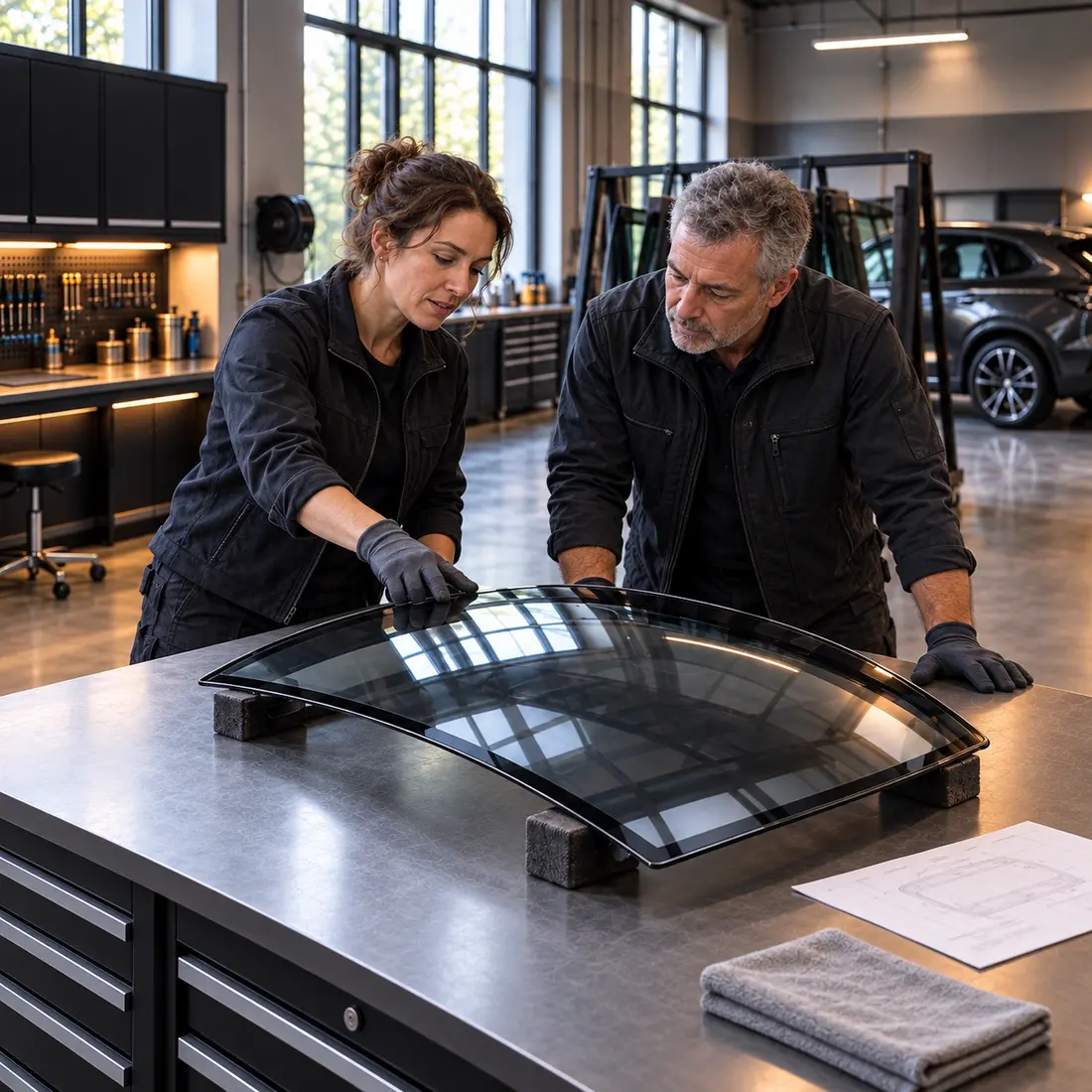
A better conversation with your installer
Establish the exact position, whether the glass moves, and which factory features must remain functional. A vehicle name alone is not a finished specification.
Decide whether the goal is adjustable shading, a diffused private state or evaluation before fabrication. Consider the operating state and the unpowered state together.
Identify the glazing and electrical expertise required before the order is finalized. Agree the work scope, care requirements and service records with the installer.
Your next configuration
Explore the material. Match the glass. Build a light-control system around the way you use your vehicle.
Glass, film and control.
A considered place to start.